
Between Two Words
Episode 9: Emily's Escape


Between Two Words the Complete Series
Between Two Words
Episode 9: Emily’s Escape
The clock on the nightstand read 4:47 AM when Emily’s eyes opened. She had not slept. She had lain in her bed for six hours, fully dressed beneath the covers, her small bag packed and waiting in the wardrobe, her heart beating frantically a rhythm she had come to recognize over the past weeks. Go, go, go!
The house was silent. Silence had settled into old walls after midnight, when even the floorboards stop their complaining and the air itself seemed to hold its breath. Emily lay still, listening for the familiar creak of her mother’s door, the heavy tread of her father’s footsteps on the stairs. Nothing. Only the distant hum of the city, muffled by the curfew, and the soft whisper of the ceiling fan turning lazy circles above her head.
She counted to one hundred. Then to two hundred. Then she threw back the covers and rose.
Her bag was where she had left it, tucked behind her winter coats in the wardrobe. A small canvas valise, worn soft at the handles, containing three changes of clothes, her passport, her documents, the photograph of Harold hidden in the pages of A Passage to India, the pressed forget-me-nots wrapped in tissue paper, and the money. All of it. The savings she had hidden for months, rolled into bundles and secured with rubber bands, tucked into the lining of the valise and into the pockets of her coat. Seven hundred and forty Hong Kong dollars. Enough for the passage out of Taiwan. Enough, she hoped, for what came after.
She had dressed in a plain grey skirt, a white blouse, and a cardigan against the morning chill. Her mother’s voice echoed in her head. “A woman should always dress properly, even when no one is watching.” She almost laughed at the absurdity of it. Here she was, leaving everything, and still she could not escape the lessons pressed into her bones.
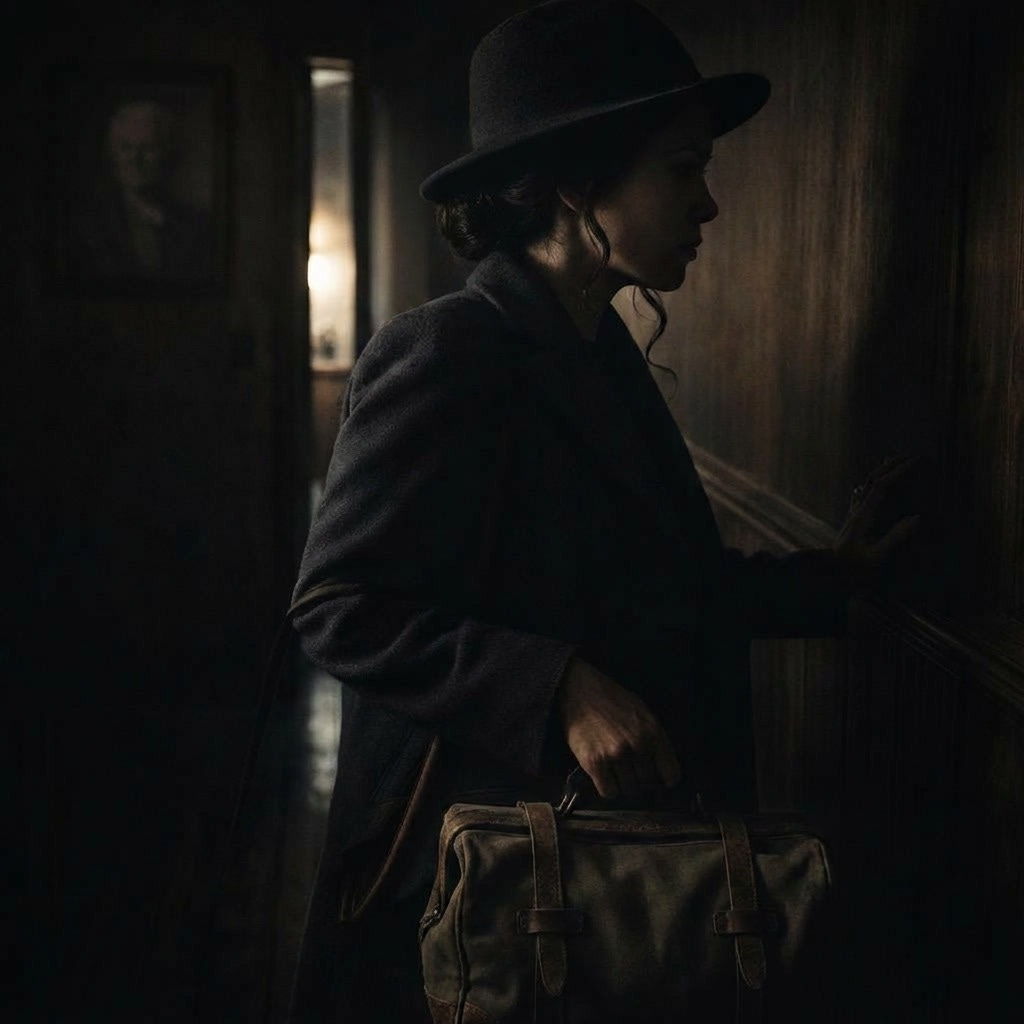
Her coat was heavy wool, dark blue, purchased in London during her first winter there. She had hidden it in a bag in her wardrobe when she came home to Hong Kong. It smelled of rain and cigarette smoke and the gas fire in their flat. It smelled of Harold. It gave her strength, feeling his presence with her. She pulled it on, then wound a scarf around her neck and tucked her hair beneath a felt hat, the brim pulled low. In the dim light of her bedroom, she looked like a stranger. Someone else. Someone brave.
She took one last look around the room. The east-facing window, where she had woken with the sun for twenty-six years. The desk where she had written her letters, where she had sat with her textbooks as a girl, dreaming of London. The bed where she had lain awake so many nights, counting the ceiling beams, wondering if she would ever have the courage to choose her own life. The window she had stared out of hopelessly wondering what Harold was up to in that far off palace of love, London.
She crossed to the wardrobe and removed the red envelope from her coat pocket. It was thick, heavier than it looked, sealed with a dab of wax she had melted over a candle flame the night before. Inside was a note, written in her neatest hand, shaky would mean she was not ready.
Dearest Mei-Ling,
You are the bravest person I have ever known. Remember what you taught me. We must show we are not broken. I am trying to be as brave as you. Continue your studies. Continue your beautiful brushstrokes. The world needs your careful hands.
With all my love,
Teacher Emily
And within it, five hundred Hong Kong dollars. More than her parents gave Ah Fong, the housekeeper in a year. Enough, perhaps, to make a small difference in a family that had lost everything twice over.
She pressed the envelope to her chest for a moment, then slipped it into her coat pocket.
The second envelope was thinner. It lay on her bedside table, addressed to Mother and Father in her most formal hand. She had rewritten it four times before she was satisfied. The final version said simply,
Dear Mother and Father,
I am sorry. I know this will hurt you, and I am sorry for that. But I cannot marry Mr. Cheung. I cannot live the life you have planned for me. I am going to London, to the life I chose for myself. I hope one day you will understand. I hope one day you will forgive me.
I thank you for raising me all these years. I thank you for your sacrifices and hard work to raise me. I thank you for giving me a home to grow and learn in.
Please take care of each other. And please do not blame Ah Fong. She knew nothing of my plans until after I was gone.
Your daughter,
Emily
The third envelope was the smallest, tucked beneath a paperweight on her desk. Inside, a note for Ah Fong, a gold bracelet and one hundred dollars. The best she could manage, after setting aside the passage and the gift for Mei-Ling. It was not enough to repay a lifetime of kindness, but it was something. A gesture. A thank you.
Ah Fong,
You have been my ally, my family within a family. I could not have survived this house without you. Please take this, and please know that I will write to you when I am safe. You will always have a place in my heart.
With love and gratitude,
Emily
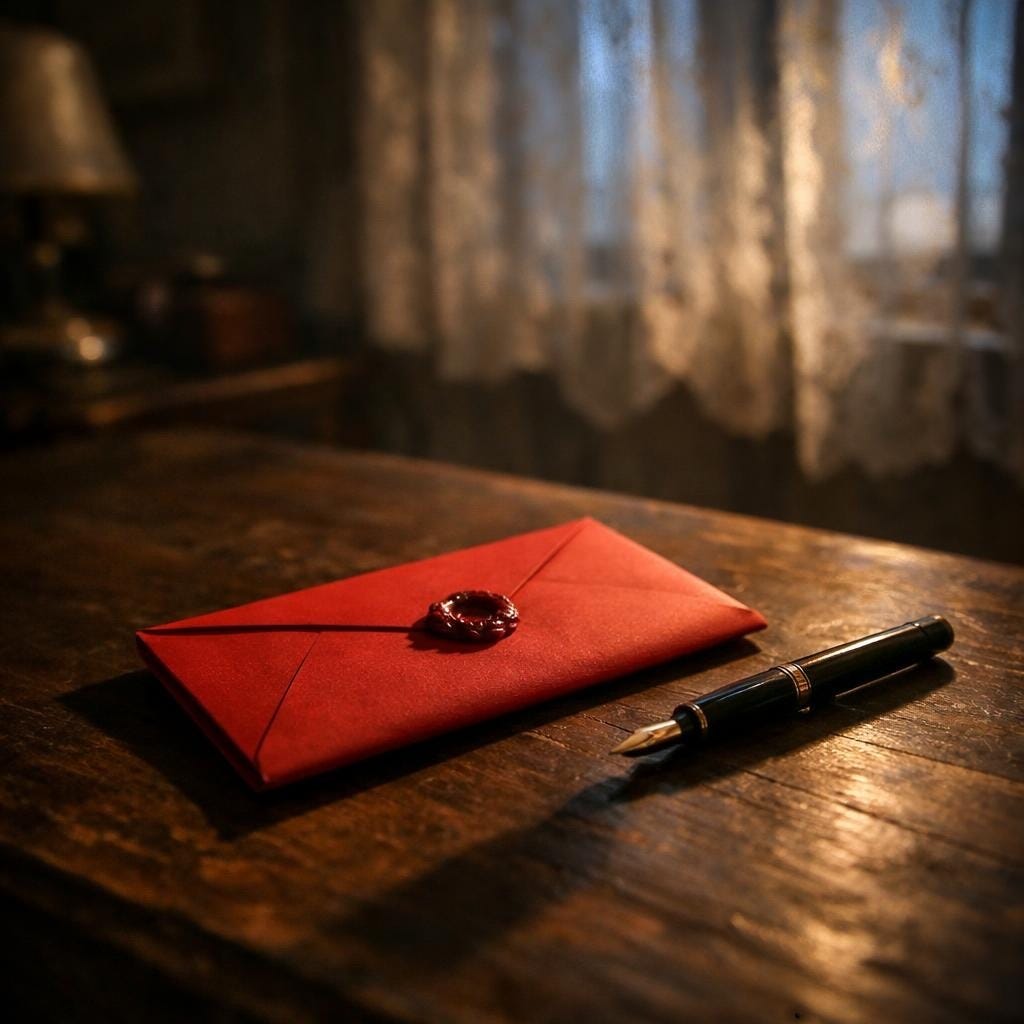
She placed the envelope on the desk, where Ah Fong would find it when she came to open the shutters at dawn.
Then she picked up her bag, checked one last time that she had everything, and opened her bedroom door.
The hallway was dark. She moved through it by memory, her feet silent on the wooden floor, her hand trailing along the wall to guide her. Past her parents’ room, where she could hear the low rhythm of her father’s breathing. Past the photograph of her grandmother on the wall, the woman who had secretly paid for her ticket to London all those years ago. I am carrying on what you began, Emily thought, touching the frame lightly. I hope you understand.
The kitchen was at the back of the house, its door leading to the alley behind. She paused at the threshold, looking back at the dark shapes of the familiar room. The kettle on the stove, the tea canisters lined up on the shelf, the wooden chopping board where her mother had taught her to slice vegetables when she was small. A life she was leaving behind. A life that had never quite fit.
She took a deep breath, slipped through the kitchen door, and was gone.
The alley was cold and damp, the cobblestones slick with the night’s condensation. Emily pulled her coat tighter and moved quickly, her shoes making soft sounds on the stone. The curfew would lift at six, but it was not yet five, and the streets would be empty. Empty, but not safe. There were patrols. There were eyes in windows, ears behind doors. She had to reach Mei-Ling’s building before the city woke, before anyone could see her and wonder why she was out so early, with a bag, with her coat buttoned to the throat.
She walked with her head down, her hat brim shielding her face, her bag pressed close to her side. The streets of Sheung Wan were narrow and winding, the old tenements leaning toward each other as if sharing secrets. Above her, laundry lines crisscrossed the gaps between buildings, empty now, their clothes taken in before the curfew. The air smelled of salt and fish and the faint sweetness of jasmine from someone’s window box.
She thought of Harold, somewhere across the sea, sleeping perhaps, or awake, or walking the streets of London with his hands in his pockets, thinking of her. She thought of his last letter, the one she had read so many times the paper had grown soft.
“Come back when you are ready. I will be here.”
She was ready. Finally, impossibly, she was ready.
The resettlement block was a grey concrete tower, one of the new ones, built after the fires to house the families who had lost everything. It rose from the crowded streets like a monument to survival, its walls already stained by the city’s damp, its windows already crowded with the lives packed inside. Mei-Ling lived on the fourth floor; in a unit she shared with six other families. Emily had been there before, had sat on the narrow bed while the girl’s mother pressed sweet bean cakes into her hands and thanked her for teaching her daughter English. She knew the way.
She slipped through the building’s entrance, past the darkened shops on the ground floor, and began to climb. The stairs were narrow, the concrete worn smooth by a thousand feet. The smell of cooking oil and incense and something else, something like hope, hung in the air. On the third floor, a baby began to cry, a thin wail that was quickly shushed by a mother’s voice. Emily paused, her heart hammering, then continued.
Mei-Ling’s door was the third on the left, a sheet of corrugated metal held together with wire and will. Emily stood before it for a long moment, listening. Silence from within. She knelt, slid the red envelope beneath the door, and pressed her palm flat against the metal.
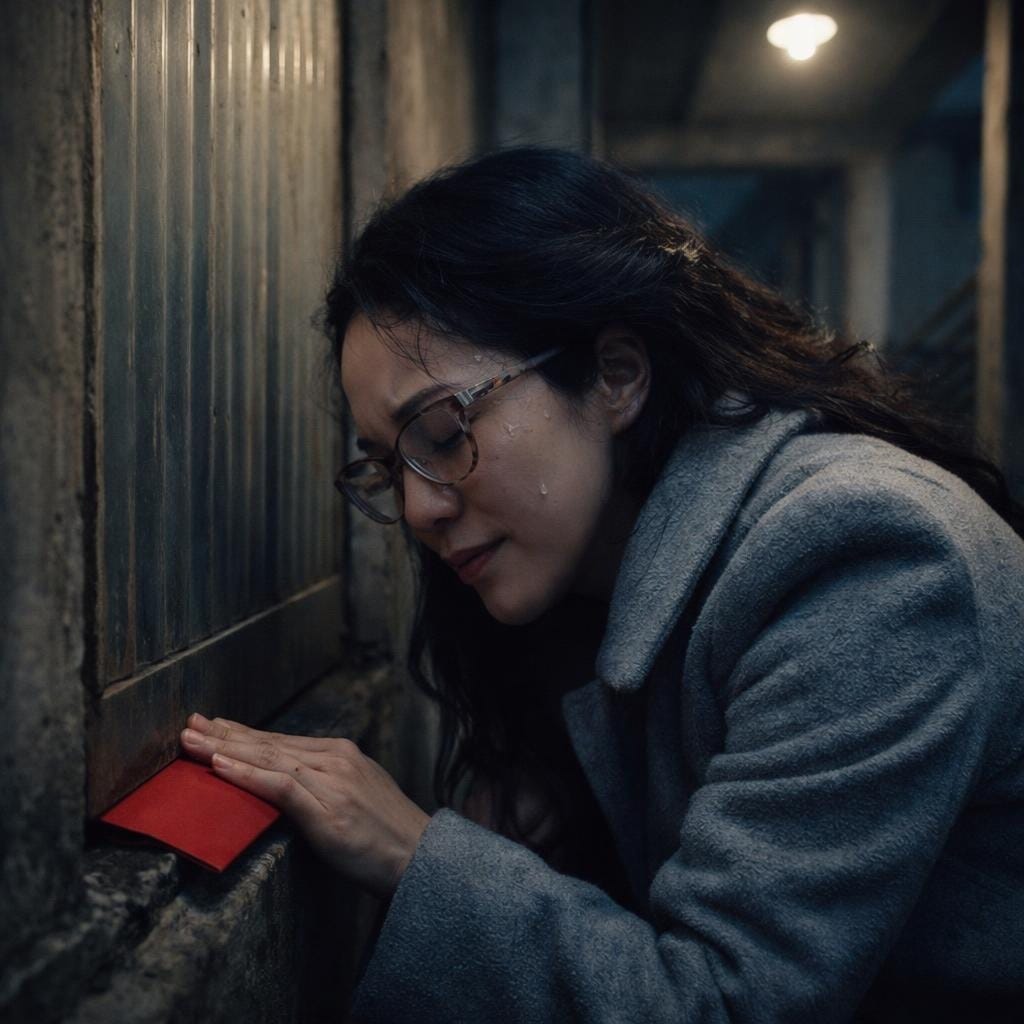
“Be brave, little one.” she thought, tears stinging her eyes. “Be braver than I have been. And when you are grown, choose your own life. Choose it with both hands.”
She rose, turned, and descended the stairs without looking back.
The ferry terminal was a dark shape against the harbor, its lights dimmed for the curfew. Emily had purchased her ticket three days before, in a crowded shop in Wan Chai, paying cash and giving a false name. The clerk had not asked questions. No one asked questions, these days, if you had money and did not linger.
She waited in the shadows of a cargo shed, watching the terminal, watching the sky. The first grey light was beginning to seep into the east, softening the edges of the buildings, turning the harbor from black to pewter. The curfew would lift soon. The city would wake. And she would be gone.
The boat was a cargo vessel, the Sea Dragon, making the overnight run to Keelung. It was not a passenger ship, but there were always berths to be had, if you knew who to ask and what to pay. Emily had paid. Forty dollars, more than the usual fare, and a promise to ask no questions and expect no comforts.
She had expected nothing. What she found was worse.
The boat was old, its hull streaked with rust, its deck cluttered with crates and barrels and coils of rope that smelled of oil and fish. The captain was a man with no teeth and no English, who gestured her toward a hatch and grunted something that might have been instructions or might have been a curse. She climbed down into the hold her bag clutched to her chest. She found herself in a space that was dark and damp and crowded with cargo and with people. Three other passengers, by the look of them, are family. A mother and two children, huddled together on a pile of sacks, their faces blank with exhaustion or fear or both.
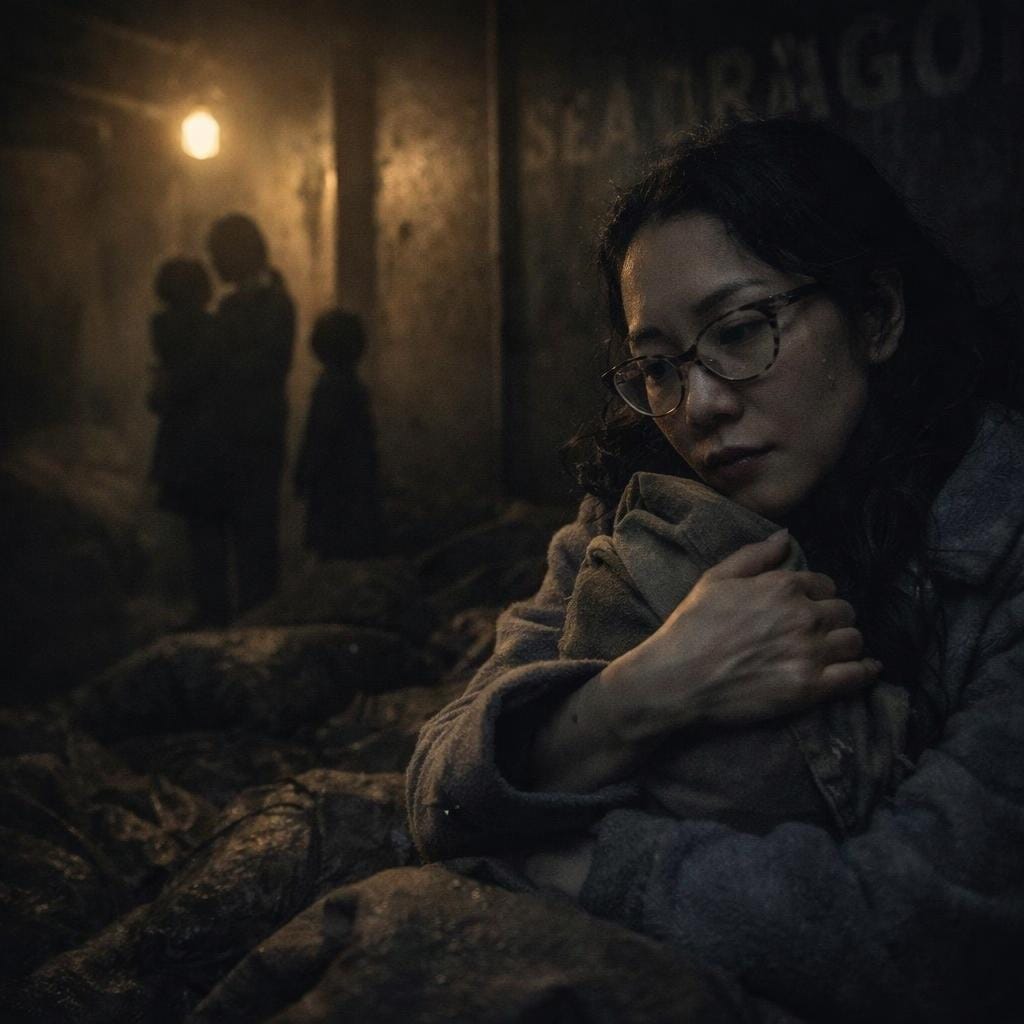
Emily found a space against the hull, as far from the others as she could manage, and sat down on her bag. The floor was wet. The air was thick with diesel and salt and the sour smell of unwashed bodies. The boat groaned beneath her, a sound like something in pain, and she felt the first lurch of movement as they pulled away from the dock.
She closed her eyes and breathed.
To Be Continued…
If this felt like something you’d like to keep listening to/reading,
subscribe to Mark Crutchfield and to me to receive future exchanges as they arrive.
The last letter/episode from Harold is here.
Subscribe to Mark Crutchfield

More from White Rabbit Musings
White Rabbit Musings is my labor of love. This publication is reader supported. All articles will remain free domain, however if you would like to support my work, please consider becoming a paid subscriber or buying me a book. Thank you so very much for reading. I appreciate your time.
 | A guest post by
|
I got caught at Mei-Ling’s door with that envelope... even while Emily is running for her own life, she’s still trying to leave a little future behind for that girl. That tiny kindness hurt more than the actual escape for me...
Well written, Dorie.